Two Fox ESS Batteries in Hertfordshire
A Hertfordshire household using about 15kWh a day now buys its electricity overnight at 7p per kWh instead of 28p, using two Fox ESS batteries. We model the saving at about £1,082 over the next 12 months. This is a high-usage home, so most households will save less.
An installer's account · Tariff rates checked October 2026
The job at a glance
- Location
- Hertfordshire
- Household use
- About 15kWh a day
- Tariff rates
- 28p per kWh daytime, 7p per kWh overnight (rates checked October 2026)
- Equipment
- 2 × Fox ESS EP12 Plus batteries, Fox ESS KH 8kW single-phase hybrid inverter
- Usable storage
- About 20.74kWh (23.04kWh nominal)
- Modelled saving
- About £1,082 over the next 12 months
- Solar panels
- None. The battery charges from the grid overnight
The brief
The homeowner wanted to know one thing: would storing cheaper overnight electricity make a real difference to their bills? They were using around 15kWh a day and paying 28p per kWh, so electricity cost roughly £4.20 a day before standing charges.
They already had a cheap overnight rate of 7p per kWh. They did not have solar panels and were not asking for them.
What we specified and why
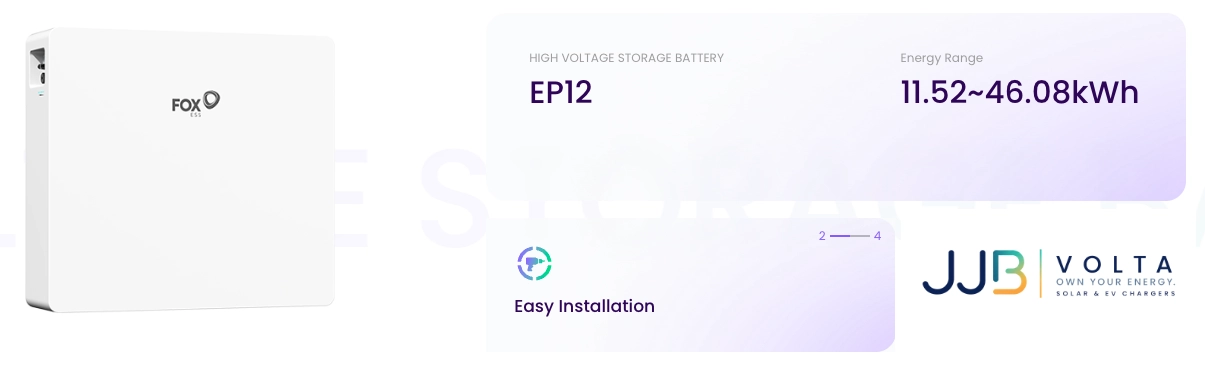
After visiting the property, we specified two Fox ESS EP12 Plus batteries (11.52kWh nominal each) with a Fox ESS KH 8kW hybrid inverter. At the rated 90% depth of discharge, that gives about 10.37kWh usable per battery and about 20.74kWh in total.
We chose two because this household uses about 15kWh a day. A smaller household would be better served by one. We set the system to charge overnight on the 7p rate and set up the Fox ESS monitoring app on the homeowner's phone.
The numbers
Our model puts the saving at £2.96 a day, about £1,082 over the next 12 months. That is a best-case style estimate for a high-usage home, and here is what sits behind it.
| Step | Figure |
|---|---|
| Daily use | 15kWh |
| Daytime rate | 28p per kWh |
| Cost at daytime rate | £4.20 a day |
| Overnight rate | 7p per kWh |
| Gap before losses | £3.15 a day |
| Modelled saving after losses | £2.96 a day, about £1,082 over the next 12 months |
Rates checked October 2026. Rates change with each Ofgem price cap review, so your figures will move with them.
What this assumes: nearly all of the household's usage can be served from the battery, and standing charges are left out. Any electricity used inside the cheap overnight window is already at 7p and gains nothing from storage. The £3.15 gap is the ceiling, and £2.96 sits close to it.
Most homes use less than this one and will save less. Our honest range for a typical home with a battery is £300 to £700 over the next 12 months.
Installation and handover
The installation went smoothly. A straightforward battery install is often done in a working day, though cable routes, the existing consumer unit and any backup requirement can add time. At handover we set up the monitoring app on the homeowner's phone so they can see the battery charging and discharging, and we explained the overnight charging schedule so they understood where the saving comes from.
What to know before buying
This is an installer's account of one job, not a long-term reliability test or a comparison of every battery brand. Here is what we would want any homeowner to check.
Space. Two batteries, an inverter and the required clearances take real wall space. We survey the location and confirm the exact model's dimensions, weight and installation requirements before confirming a design.
Nominal versus usable. 11.52kWh is the stated capacity. About 10.37kWh is usable at the rated 90% depth of discharge.
Bigger is not always better. If your home uses only a few kWh a day, extra storage can sit partly charged and add nothing to your savings.
Power cuts. Backup during an outage needs compatible EPS equipment and a design built for it. A standard grid-connected battery does not provide it automatically.
Warranty. Manufacturer warranty terms depend on the exact model. We confirm the written terms for the equipment on your quote before you commit.
Solar later. The KH hybrid inverter can form part of a solar and battery system, so a battery-first install does not rule out panels in future.
Questions homeowners ask
Can a battery work without solar panels?
Yes. This customer shifts their electricity purchases into the cheap overnight window with no panels at all.
How long does an install take?
Often one working day. We confirm after checking the property and your existing electrics.
Can it go outdoors?
The installation location must meet the exact model's manufacturer requirements. We assess the location, clearances, wall and fire-safety requirements at survey.
Will my saving match this case study?
Probably not. This home uses 15kWh a day. We look at your usage and tariff first and tell you honestly whether a battery makes sense, and whether one or two would suit.