Why we install Fox ESS — full disclosure first
Let's be upfront: Fox ESS is the battery we recommend and install. That means you should read this review with the same healthy scepticism you'd bring to any installer talking about their own kit. So instead of a sales pitch, here's what we'd tell you if you asked us in your kitchen — including the parts that aren't perfect.
We didn't land on Fox ESS by accident. When we sized up the UK home battery market we looked at Tesla, GivEnergy, SolarEdge, Enphase and the budget end of the market. Fox ESS won on the combination that actually matters for a UK home: usable capacity per pound, cold-weather behaviour, a hybrid inverter that genuinely manages solar, battery and grid together, and a warranty the manufacturer actually stands behind.
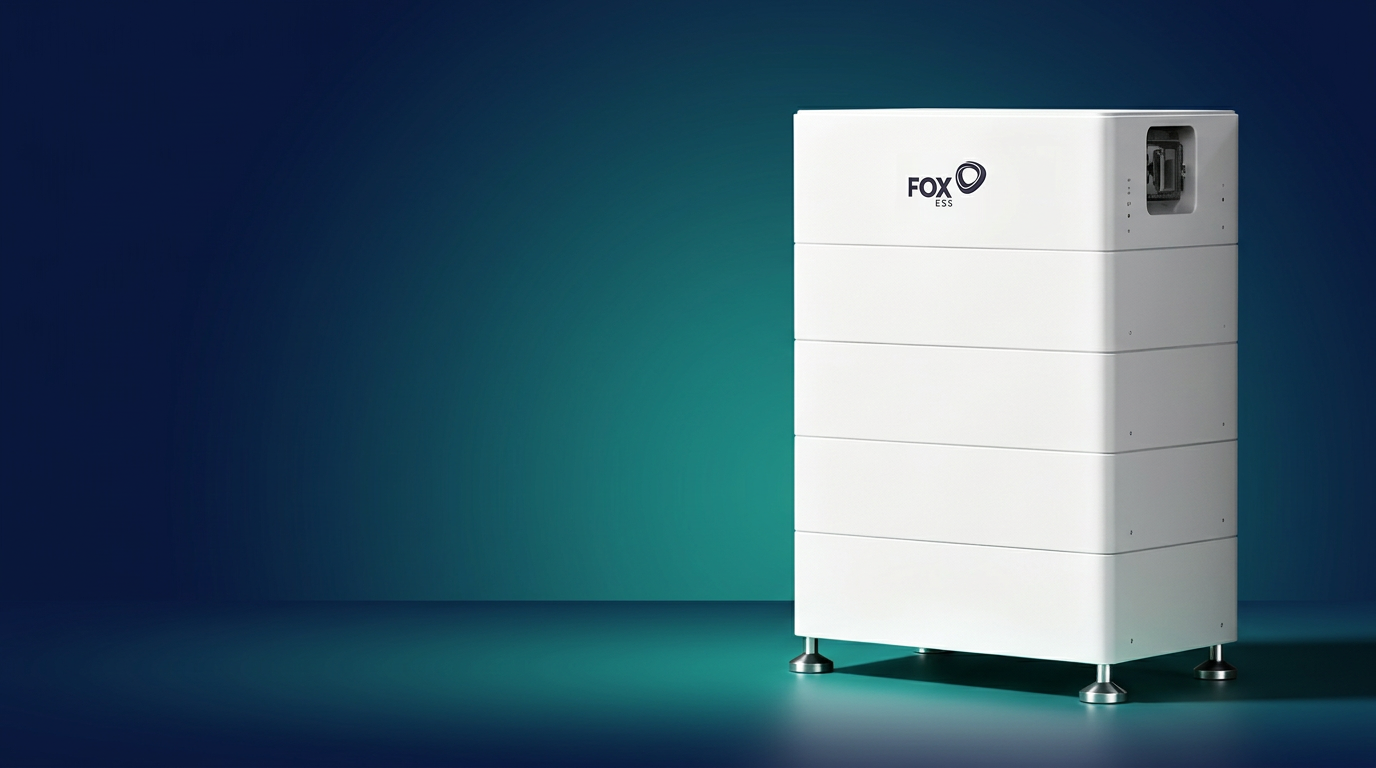
The unit we fit: Fox ESS EP11-H
The EP11-H is a stackable 10.36kWh (usable) lithium iron phosphate battery, paired with a Fox ESS hybrid inverter. LFP chemistry matters: it's more thermally stable than the older NMC chemistry, degrades more slowly, and carries no meaningful fire-risk concerns when installed correctly.
- Usable capacity10.36 kWh
- ChemistryLithium iron phosphate (LFP)
- Depth of dischargeUp to 90%
- Manufacturer warranty10 years
- Typical evening coverage5–7 hours
- Winter behaviourSelf-heating built in
- StackableAdd capacity later
- Backup/EPS optionAvailable if specified
Real-world performance: what we see on customer systems
On a correctly specified system with a Time-of-Use tariff, the EP11-H does exactly what the maths says it should. It charges overnight at the cheap rate — 7–9.5p/kWh depending on tariff — and discharges through the evening peak at 24–33p/kWh. That daily cycle is where the saving comes from, and it happens in January exactly as it does in July.
Paired with solar, self-consumption typically moves from 40–50% without a battery to 70–80% with one. The round-trip efficiency — what you get back out versus what you put in — sits around 90–95% in real installations, which is at the good end of the market.
The number customers actually ask about is the bill. On a well-matched system we typically see £25–£60 a month off the electricity bill — real money, not brochure money.
The winter question — where cheap batteries fall over
Lithium batteries hate the cold. Below around 5°C, most batteries throttle their charge rate to protect the cells — which is exactly when you need them most, in a UK winter, in a garage or utility room that's sitting at 3°C.
The EP11-H has self-heating built in. It warms its own cells before accepting a full charge, so the overnight cheap-rate charge happens at full speed even in January. This sounds like a small detail. It isn't — it's one of the main reasons we specify this unit over cheaper alternatives that quietly underperform for four months of the year.
The app and day-to-day living with it
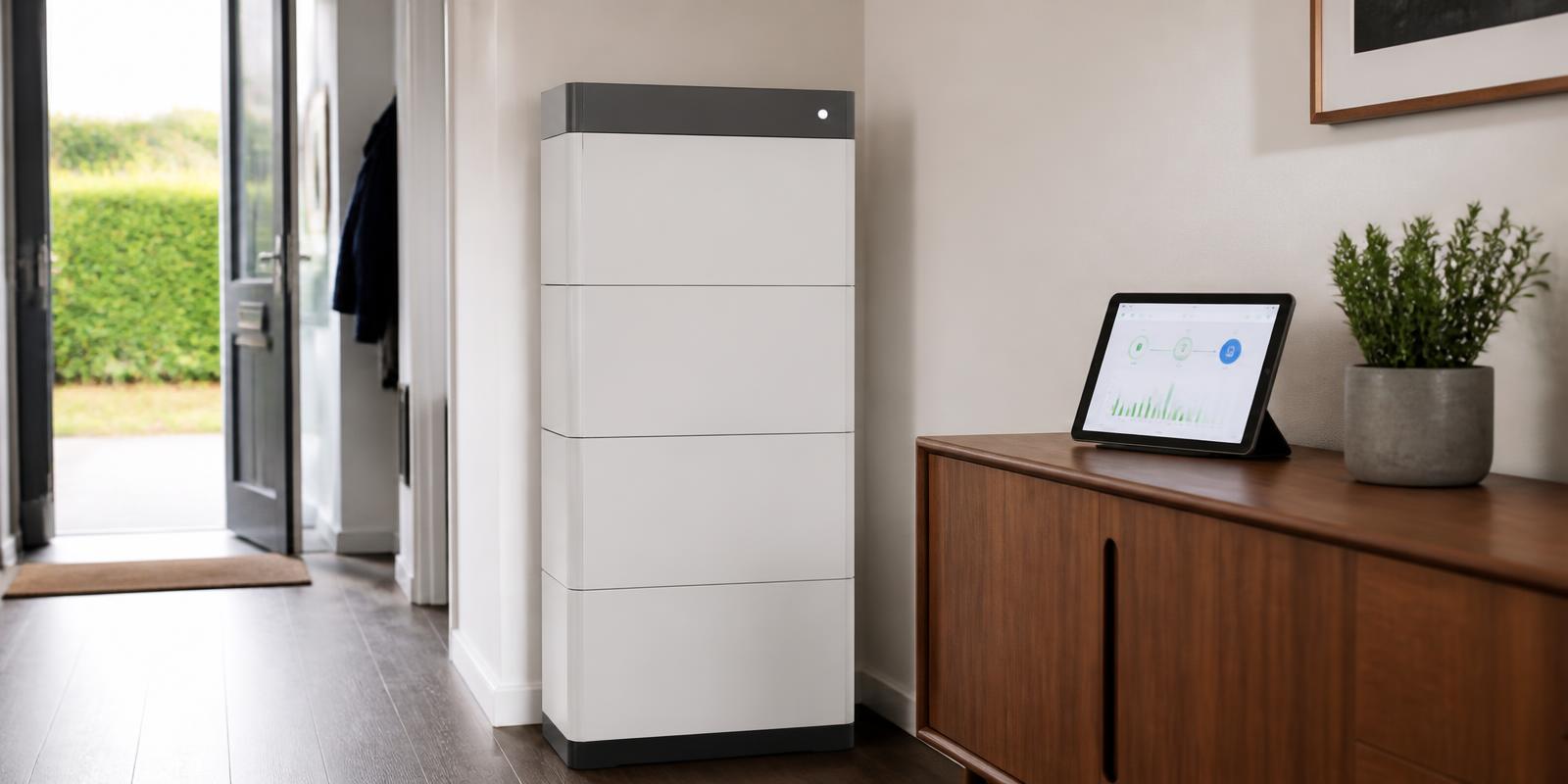
The Fox ESS app (FoxCloud) shows live flow — what solar is generating, what the house is using, what the battery is doing — plus daily, monthly and lifetime totals. Charge windows for Time-of-Use tariffs are set in the app, and once configured at commissioning the system simply runs itself.
Honest notes: the app is functional rather than beautiful. The data is all there and it's reliable, but the interface feels designed by engineers rather than a consumer tech company. Most customers check it daily for the first month, then weekly, then barely at all — which is exactly how a battery should be. It should be boring.
The honest weaknesses
No battery is perfect, and you'd deserve to hear this from us before you buy:
- The app design is functional, not polished — the data is good, the presentation is plain.
- Backup/EPS (keeping circuits live in a power cut) is not automatic — it has to be specified and priced as part of the install. Many competitors gloss over this too.
- Fox ESS is a huge manufacturer but a less familiar name in the UK than Tesla — if brand recognition matters to you, be aware you're paying for hardware quality rather than a logo.
- Like every battery on the market, the economics depend on being on the right tariff. On a flat-rate tariff, any battery's payback stretches — we say this on every survey call.
How it compares to the alternatives
Versus Tesla Powerwall: the Powerwall is excellent kit with a bigger brand name and a slicker app — at a meaningfully higher price per kWh installed. For most homes we survey, the Fox ESS delivers the same practical outcome for less money.
Versus GivEnergy: a solid UK brand with good support. The EP11-H's self-heating and stackable format edge it for UK winter installs in our experience.
Versus budget batteries: the gap shows up in winter charge rates, depth of discharge, and whether the manufacturer is still answering the phone in year eight of a ten-year warranty. This is where cheap gets expensive.
Where Fox ESS genuinely excels
Beyond the headline spec, these are the strengths we see play out on real installs — and the reasons we keep specifying the brand:
- Modular scalability: the stackable EP series means you can start small and add battery blocks later as your energy needs grow — no need to buy all your capacity on day one.
- Lower entry cost: Fox ESS generally offers a cheaper starting price and better value per usable kWh for small and mid-sized systems than the big-name brands.
- Longer warranty term: up to 12 years on select ranges (such as the EQ series), subject to energy-throughput limits — worth checking the terms on whichever model you're quoted.
- Smart grid and tariff integration: pairs well with dynamic UK energy optimisation services to maximise export earnings and off-peak savings.
Battery first, solar later — yes, that works
A question we hear more and more: "can I start with the battery and add solar panels later?" You can. This is a well-established approach known as a battery-first or standalone battery setup — you install the battery now to make the most of cheap overnight Time-of-Use tariffs, then retrofit solar panels when budget or timing allows.
How easily the panels are added depends entirely on which inverter is installed alongside your battery:
If you have a hybrid inverter (the recommended route for future solar): a Fox ESS hybrid inverter — such as the H1 or EVO series — already has the solar electronics (MPPTs) built in. When you're ready for panels, your installer simply mounts them on the roof and connects the cables into the existing inverter. Because the system is DC-coupled, no extra inverter is needed — making the eventual solar upgrade cheap and highly efficient.
If the original install used a non-hybrid inverter: adding panels later would mean extra inverter hardware. That's exactly why, on battery-only installs where solar is even a "maybe", we recommend specifying the hybrid inverter from day one — it's the version of the kit that keeps your options open.
Our verdict — who it's right for
The Fox ESS EP11-H is the right battery for most UK homes we survey: households using meaningful electricity in the evening, on (or willing to switch to) a Time-of-Use tariff, planning to stay in the property long enough to see the payback. It's not the cheapest option and it's not the flashiest. It's the one we'd fit in our own homes — which, between Jamie and Dan, we have.
The caveat that matters more than the brand: sizing and tariff. A correctly specified Fox ESS on the wrong tariff underperforms; a correctly specified system on the right tariff is one of the strongest home energy investments available right now. That's what a survey is for — we model your actual consumption and tell you honestly whether the numbers work.
We're electricians first. We design and install solar, battery storage and EV charging systems for homeowners across Hertfordshire and Essex. MCS certified, NAPIT registered, Which? Trusted Trader approved. Every system is survey-designed and backed by a 6-year workmanship guarantee.