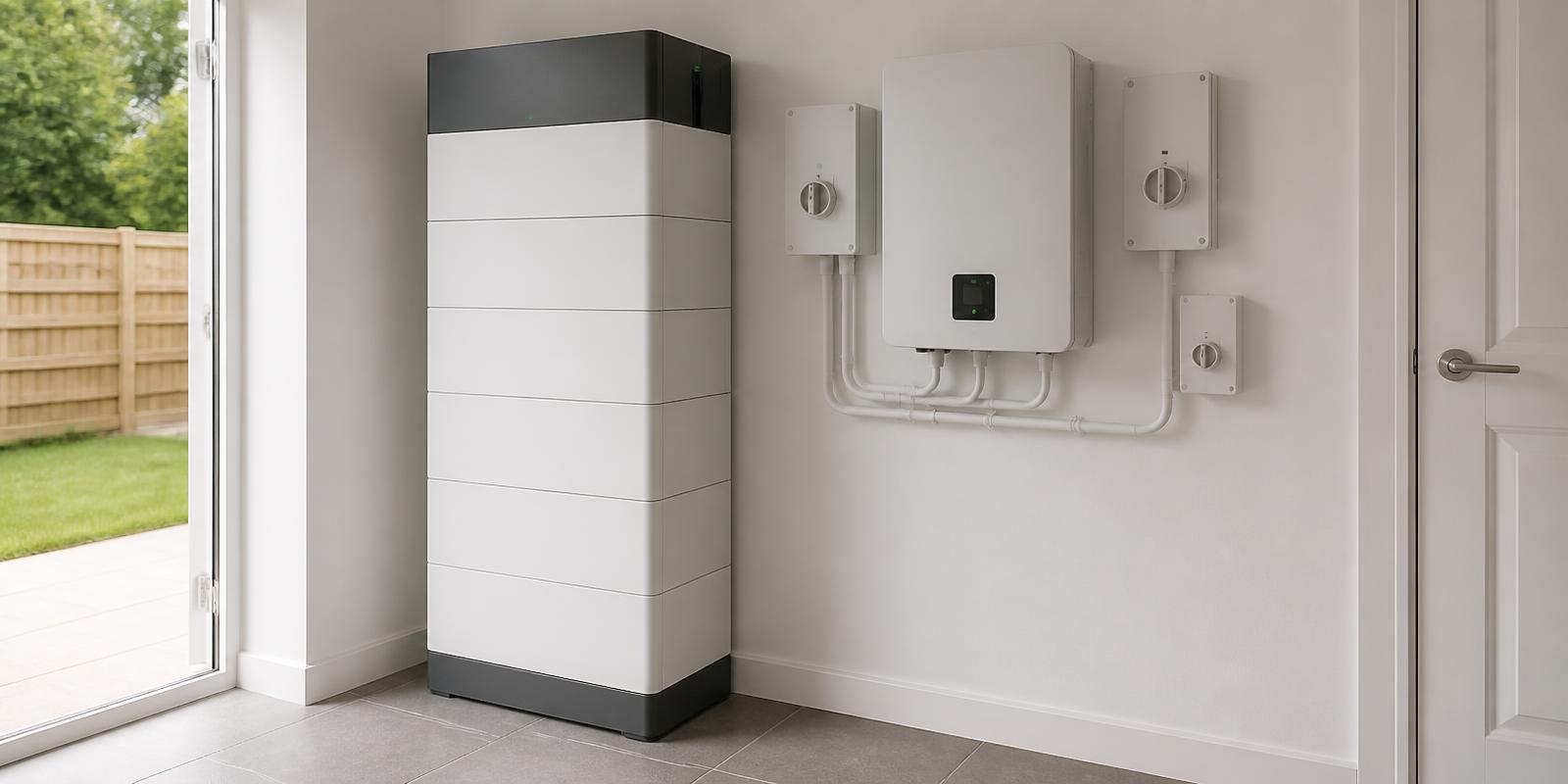
What a battery actually does — and doesn't do
A solar battery stores electricity your panels generate during the day so you can use it in the evening when your panels aren't producing. Without one, that surplus solar energy gets exported to the grid via the Smart Export Guarantee — typically at 4–15p per kWh. You then buy it back at 24–27p when you need it in the evening.
A battery closes that gap. Instead of exporting cheaply and reimporting expensively, you use what you generated. Simple in principle. Significant in practice.
But the bigger story — the one most installers skim over — is what a battery does in winter.
The winter question most installers avoid
In December and January in Hertfordshire, your solar panels generate roughly 20–30% of their July output. Some days, barely anything. A homeowner who bought solar purely on the summer savings pitch is going to be disappointed come November.
Here's what changes with a correctly specified battery and a Time-of-Use tariff:
Your battery charges overnight from the grid at 7–7.5p/kWh — the Octopus Go rate, available right now to any UK homeowner. It then discharges during the 4–9pm evening peak when grid electricity costs 24–27p/kWh.
That 17p per unit difference — charged and discharged once per day — is your winter saving. It has nothing to do with sunshine. It works in January just as well as July.
On a 10kWh battery with Octopus Go, charging from the grid overnight at 7.5p and displacing 24p+ daytime electricity, the annual saving from tariff arbitrage alone is typically £400–£700. Before a single solar panel contributes anything.
The real numbers for a typical Hertfordshire homeowner
Let's use a concrete example. A 3–4 bed detached home in Hertfordshire, annual electricity bill around £1,750, considering a 4kWp solar system with a 10kWh Fox ESS battery.
- Self-consumption of solar40–50%
- Surplus exported via SEG50–60% @ 4–15p
- Annual saving from solar£400–£600
- Self-consumption of solar70–80%
- Overnight charge / peak dischargeYear-round
- Average annual saving£700-£1200
UK homeowners installing solar panels with battery storage in 2026 see average savings of £765 per year, with well-optimised systems saving considerably more.
The difference battery makes: typically £200–£400 additional saving per year on top of solar alone. On a correctly specified 10kWh system costing £5,000–£6,000 installed, that's a payback of 7–10 years on the battery element — with 15+ years of useful life ahead of it.
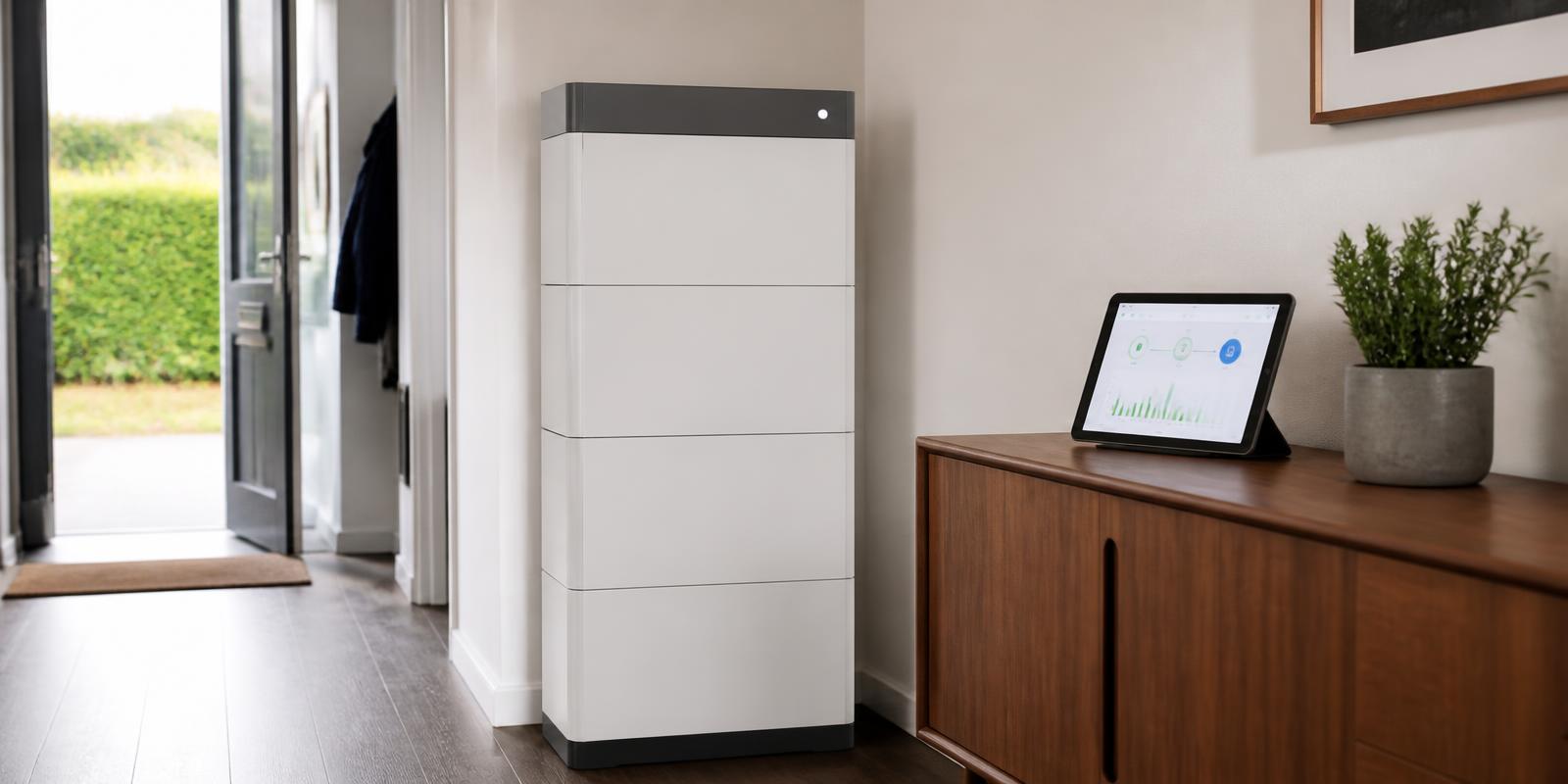
Why sizing matters more than brand
This is the thing most installers won't tell you directly, because the answer can cost them a sale.
An undersized battery — say, 5kWh on a household that uses 8–10kWh in an evening — runs flat by 8pm. You're back on the grid for the rest of the night at full rate. The savings on paper never materialise in practice.
For most UK homes, a 10kWh battery sized to cover 5–7 hours of typical evening usage (18:00–23:00) is the right starting point. Undersizing means you don't maximise savings. Oversizing means you're paying for capacity you won't use daily.
At JJB Volta, we size every battery against your actual consumption data — not a generic household average. We use Fox ESS EP11-H systems: 10.36kWh usable capacity, self-heating for UK winter temperatures, and a 10-year manufacturer warranty. It's not the cheapest option. It's the right one.
When battery storage is a strong investment
Battery storage makes compelling financial sense when:
- You have solar panels (or are installing them) and switch to a Time-of-Use tariff.
- Your household uses significant electricity in the evenings — which most families do.
- You have or plan to get an EV. The combination of solar, battery and home EV charging is where the numbers get genuinely impressive — saving £400–£600 per year on EV charging alone, on top of household electricity savings.
- You plan to stay in your property for 7+ years.
When it's a weaker case
Honest answer: if you're on a standard flat-rate tariff and have no intention of switching, the battery economics are softer. Without a smart tariff, payback stretches to 12–15 years — marginal given most battery warranties are 10 years.
The fix isn't expensive: switching to Octopus Go or a similar Time-of-Use tariff costs nothing. It's the single most impactful thing you can do to improve your battery's financial performance before spending a penny on hardware.
We tell every prospective customer this on the survey call. If they're not willing to switch tariff, we factor that honestly into the payback projection.
What we'd tell our own families
We're electricians. We've seen good systems and bad ones. We've seen batteries that have halved household electricity bills and batteries that have disappointed customers who were sold on unrealistic claims.
The honest summary for 2026: a correctly specified 10kWh battery, paired with solar panels and a Time-of-Use tariff, is one of the strongest home energy investments available to a UK homeowner right now. Not because of any government incentive or green subsidy — because the price gap between overnight grid electricity and peak grid electricity has never been wider, and a battery captures that gap every single day of the year, including in January.
The key word is correctly specified. Which means sized for your actual consumption, installed with a hybrid inverter that manages solar, battery and grid together, and commissioned with the right tariff in place from day one.
If you want to know whether the numbers work for your specific property, that's exactly what our free survey is for. We'll model it honestly — including the assumptions, the winter picture, and the payback period without the marketing inflation.
We're electricians first. We design and install solar, battery storage and EV charging systems for homeowners across Hertfordshire and Essex. MCS certified, NAPIT registered, Which? Trusted Trader approved. Every system is survey-designed and backed by a 6-year workmanship guarantee.