The cost gap in black and white
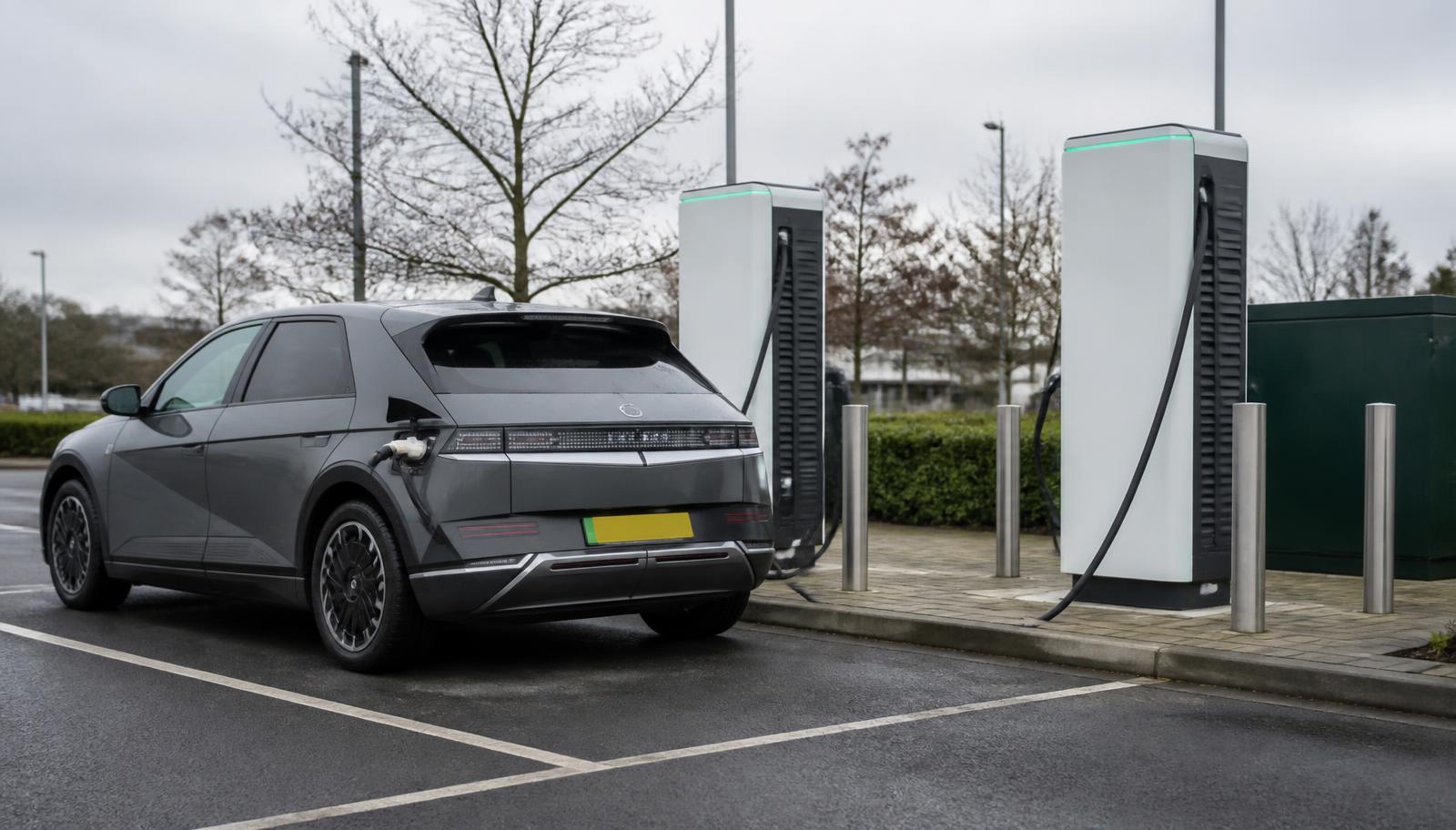
Let's start with the current UK charging rates. These are verified figures from Zapmap's March 2026 price index — not estimates.
Home charging is roughly 5–10× cheaper than public charging on an off-peak EV tariff.
What it means for a typical Hertfordshire driver
Let's use a concrete example. A driver covering 10,000 miles per year in a mid-size EV achieving 3.5 miles per kWh — a Tesla Model 3, VW ID.4, or similar. That's approximately 2,857 kWh of electricity needed per year.
| Charging method | Rate | Annual cost | vs public rapid |
|---|---|---|---|
| Public rapid (PAYG) | 76p | £2,171 | — |
| Public standard (PAYG) | 54p | £1,543 | — |
| Home — standard tariff | 27p | £771 | Save £1,400 |
| Home — off-peak (Octopus Go) | 7.5p | £214 | Save £1,957 |
| Home off-peak + solar | 0–3p | £0–£86 | Save £2,100+ |
Charging at home on an off-peak tariff costs just £350–£450 per year for 10,000 miles. Public rapid charging for the same distance costs £1,570–£1,850. The home charger installation costs £999–£1,049 depending on the unit we specify. At those savings, it pays for itself in under 12 months compared to public rapid charging dependency.
Why a 3-pin plug isn't a real alternative
Some EV owners delay installing a home charge point and use a standard 3-pin socket instead. It works — after a fashion — but there are three problems.
- Speed: A 3-pin socket delivers 2.3kW. A 7kW home charge point delivers three times as much. A 40%-to-full overnight charge on a 64kWh battery: 3–4 hours with a home charger; 10–12 hours with a 3-pin plug.
- Safety: A standard domestic socket is not designed for sustained high-load use overnight. Drawing 2.3kW continuously for 10+ hours generates heat in the socket and plug. This is the reason every major EV manufacturer recommends a dedicated charge point for regular home charging.
- Intelligence: A 7kW home charge point connects to your tariff and schedules charging automatically for the cheapest overnight window. A 3-pin plug draws power the moment you plug in — at whatever the rate happens to be, including peak evening prices.
The Time-of-Use tariff question
This is the detail most EV charger installers gloss over because it requires a conversation about your energy supplier — which feels outside their lane. It shouldn't.
The difference between charging on a standard tariff and charging on Octopus Go is roughly £550–£600 per year on 10,000 miles. The tariff switch costs nothing and takes about 10 minutes to set up.
If you're already on a flat-rate tariff, switching to Octopus Go before your charger is installed is the single highest-impact action you can take before we arrive.
The solar pairing case
If you have solar panels — or are planning to install them alongside an EV charger — the economics improve further.
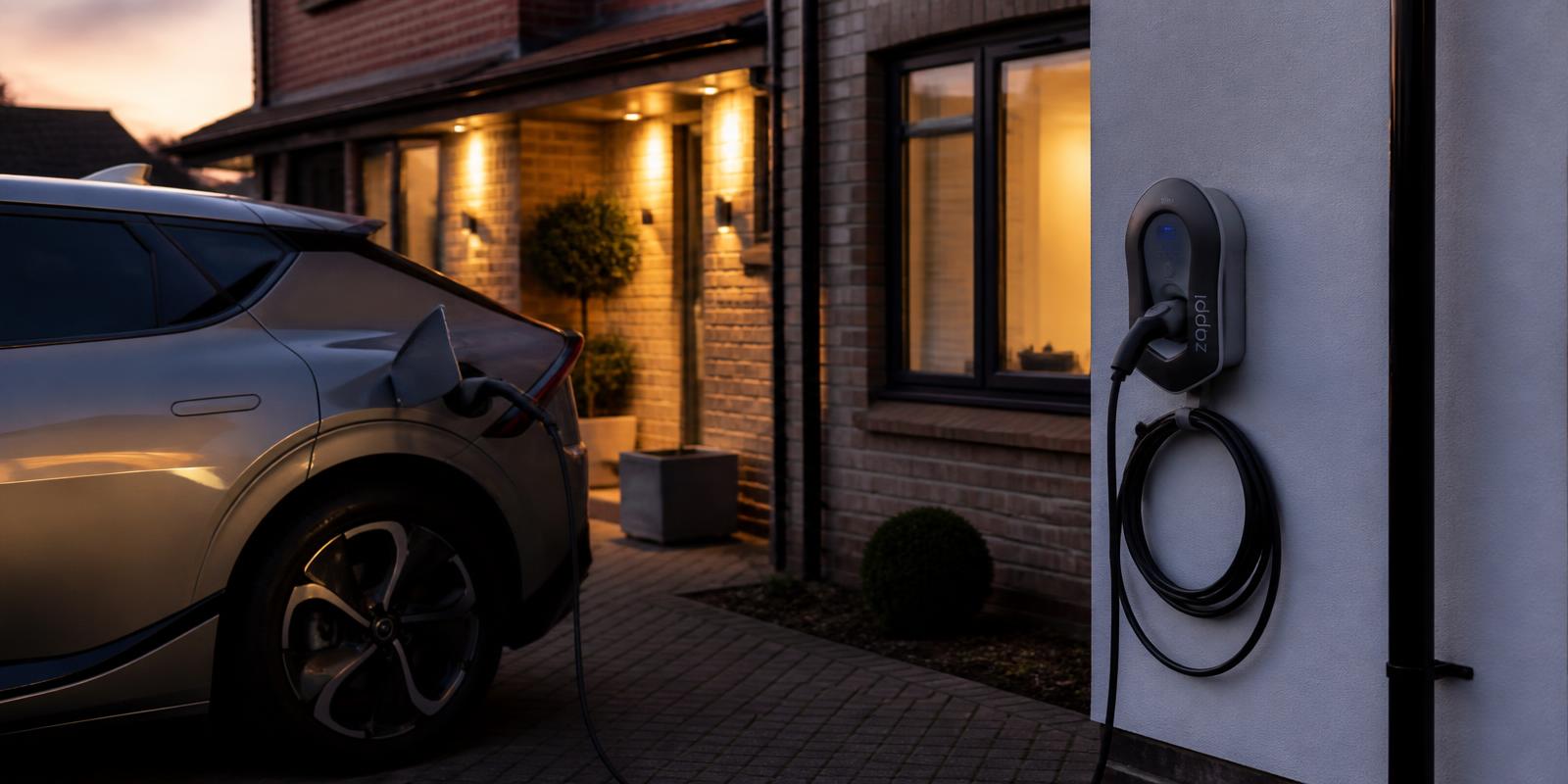
A myenergi Zappi charger, which we install specifically for solar-enabled homes, operates in three modes:
On a good summer afternoon with a 4kWp solar system generating surplus, Eco+ mode charges your car at effectively zero grid cost. A typical 4kWp UK solar system covers approximately 30% of annual EV charging needs. Combined with overnight off-peak charging for the remaining 70%, your effective annual cost for 10,000 miles can drop below £100.
Compare that to £2,171 for the same miles on public rapid chargers.
What the installation actually involves
A standard home EV charger installation takes 3–5 hours. We assess your electrical supply at the survey visit, confirm the best installation location, and give you a fixed price before we book the job.
On installation day: we run a dedicated circuit from your consumer unit, mount the charge unit at your chosen location — garage wall, driveway side wall, or external house wall — connect everything, commission the charger, connect it to the app, set up your overnight schedule, and issue your Part P electrical certificate before we leave.
No return visits. No separate certification appointment. Done in a day.
The units we install — Ohme Home Pro, myenergi Zappi and Wallbox Pulsar Plus — all include smart scheduling, app control, and compatibility with every major EV brand including Tesla, BMW, Volkswagen, Porsche, Land Rover, Kia and BYD.
The honest answer on payback
A home charge point costs £999–£1,049 installed, depending on the unit. Against public rapid charging dependency at £2,171 per year for 10,000 miles, the payback is under 6 months.
Against a mixed charging pattern — say 60% public, 40% home on a standard tariff — the payback is closer to 12–18 months.
Against a home off-peak tariff (Octopus Go), you save approximately £550–£600 per year in charging costs alone vs standard-rate home charging. The charger pays back its cost in 2 years on the tariff saving element alone.
We'll calculate the specific payback for your car and mileage on the survey call — using your actual tariff, your actual annual mileage, and the unit best suited to your property.
One thing worth knowing before you book
If you have or plan to install solar panels, tell us at the survey stage — not after. The charger we specify changes. A Zappi is the right choice for a solar-enabled home. An Ohme is the right choice for a home optimising on tariff arbitrage without solar. Getting that decision right at the start means the system works as a whole rather than two separate products that happen to coexist.
We're the only local installer covering Hertfordshire and Essex who designs solar, battery storage and EV charging together from day one. That integration matters — and it's the thing that makes the numbers in this article achievable rather than theoretical.
We install home EV charge points across Hertfordshire and Essex. Approved installer of Ohme, Zappi and Wallbox charge points. Every installation is fully certified, done in a day, and backed by a 6-year workmanship guarantee.