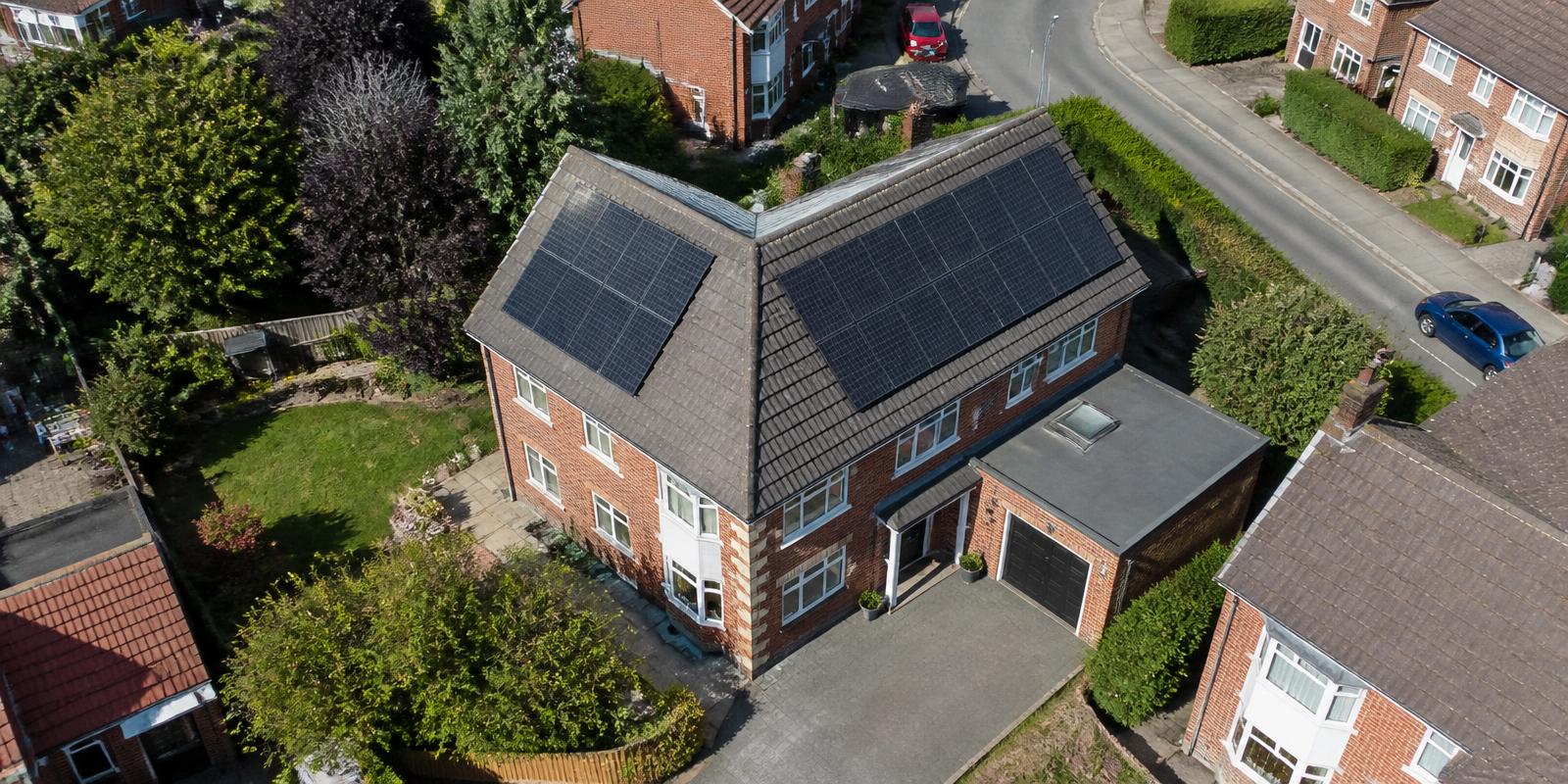
Short answer: no. Your roof does not need to face south for solar panels to make strong financial sense. But the full answer is more useful than the short one — so here it is.
Why south-facing became the rule
Solar panels generate electricity from daylight. The more direct that daylight — and the longer it hits the panel — the more electricity is produced. In the UK, because we sit in the northern hemisphere, the sun tracks across the southern part of the sky throughout the day. A south-facing roof at a 30–40° pitch captures sunlight from roughly 8am to 4pm in winter, and from before 6am to after 7pm in summer. That's why south-facing is optimal.
The industry built its pitch around this. Decades of marketing later, "south-facing roof" became shorthand for "solar-ready" — and by implication, every other orientation became second-class.
It was never quite that simple.
What the actual numbers say about other orientations
Many UK homeowners assume their roof is unsuitable for solar panels because it does not face perfectly south. In reality, most roofs across the UK can generate substantial solar electricity when correctly designed.
The hidden advantage of east-west roofs
Here's the thing most solar companies don't explain, because it complicates their sales conversation.
A south-facing system generates the bulk of its electricity between 11am and 2pm — a midday peak that, for most working families, coincides with an empty house. You generate heavily when nobody's home, export cheaply via the Smart Export Guarantee, then buy back at full rate when the family returns at 6pm.
An east-facing slope generates strongly from 7am to noon — when people are getting up, making breakfast, running appliances before work or school. A west-facing slope generates from noon to 6–7pm — exactly when the family is home, cooking, charging devices, running the dishwasher.
How battery storage changes the orientation question entirely
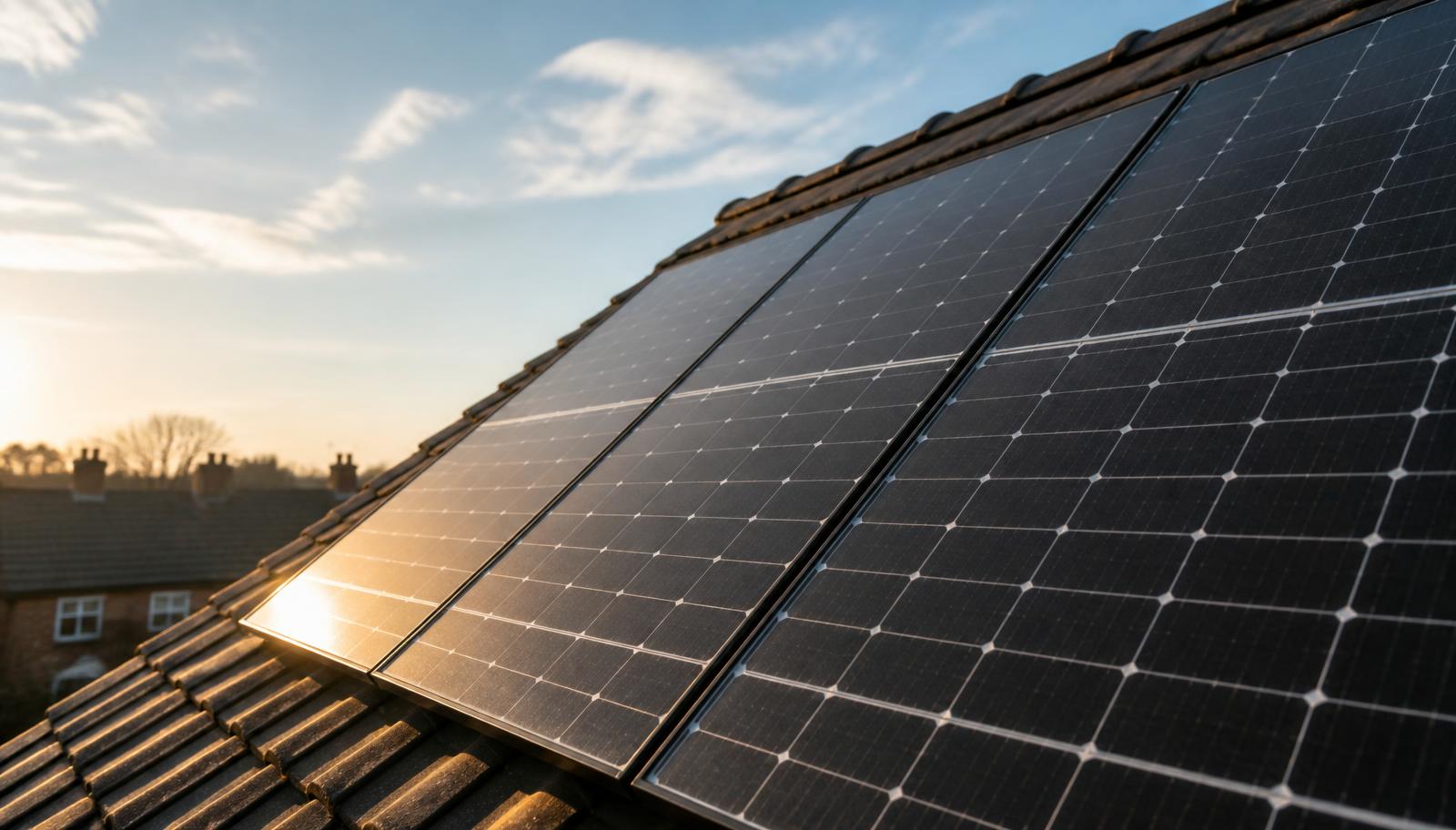
If you add a 10kWh battery — which we recommend for almost every modern installation — the orientation question becomes even less critical.
A battery doesn't care when your panels generate. It stores whatever they produce during the day and releases it whenever you need it. A midday surplus from a south-facing roof and a morning surplus from an east-facing roof both end up in the same battery, available for the same 6pm peak.
The battery neutralises the timing disadvantage of non-south orientations. What you're left with is the generation difference — and as the figures above show, for east, west and SE/SW orientations, that difference is manageable.
For most homes with non-south-facing roofs, the question isn't "is solar viable?" — it's "what's the right system size to compensate for slightly lower output?" That's a survey question, not a reason to rule solar out before you've picked up the phone.
When orientation does genuinely matter
Honesty requires us to say this clearly: there are situations where roof orientation significantly affects the viability of a solar installation.
- Heavy shading is usually a bigger problem than orientation. A tree that shadows your south-facing roof for three hours a day is a bigger problem than an east-facing unshaded roof.
- North-facing as the only available surface is genuinely limiting. If your only usable roof faces due north and there's no east, west or south slope, solar is unlikely to be cost-effective — and we'll tell you so on the survey call.
- Steep pitch on an east or west roof can reduce output more than a shallower pitch. A 45° west-facing roof loses more than a 30° west-facing roof. We model this against your specific roof geometry, not a generalisation.
What we do on every survey
When we visit a Hertfordshire property for a solar survey, we assess:
- Roof orientation on every available slope.
- Roof pitch angle.
- Shading — from trees, chimneys, neighbouring buildings — at different times of day and different seasons.
- Your actual energy usage profile: when you're home, when your biggest loads run, what your current bill looks like.
- Whether an east-west split across multiple roof surfaces makes more sense than a single-orientation installation.
From this we produce a system design and a financial projection that reflects your actual roof — not a generic south-facing assumption. You see the expected annual output, the self-consumption percentage, the payback period, and the assumptions behind every number.
If the numbers work for your roof, we'll tell you. If they don't, we'll tell you that too.
The bottom line for Hertfordshire homeowners
Most UK homes are viable for solar. The south-facing ideal is real but it is not a prerequisite. East and west orientations typically deliver 80–85% of south-facing output — and for households at work during the day, they can actually deliver higher self-consumption.
The question worth asking is not "does my roof face south?" It's "what would a system actually generate on my specific roof, and does the financial case stack up?" Those are questions with real answers, not generalisations — and the only way to get them is a proper survey.
We offer free surveys across Hertfordshire and Essex. We model your roof, your usage, and your tariff. If solar makes sense, we'll show you the numbers. If it doesn't, we'll tell you that too — and you won't have wasted anything except an hour of your time.
We're electricians first. We design and install solar, battery storage and EV charging systems for homeowners across Hertfordshire and Essex. MCS certified, NAPIT registered, Which? Trusted Trader approved. Every system is survey-designed and backed by a 6-year workmanship guarantee.